StoryTerra: Introducing Historical Figures
Stories have settings. History has events. But both are made of people, and until now, StoryTerra didn't really let you meet them.
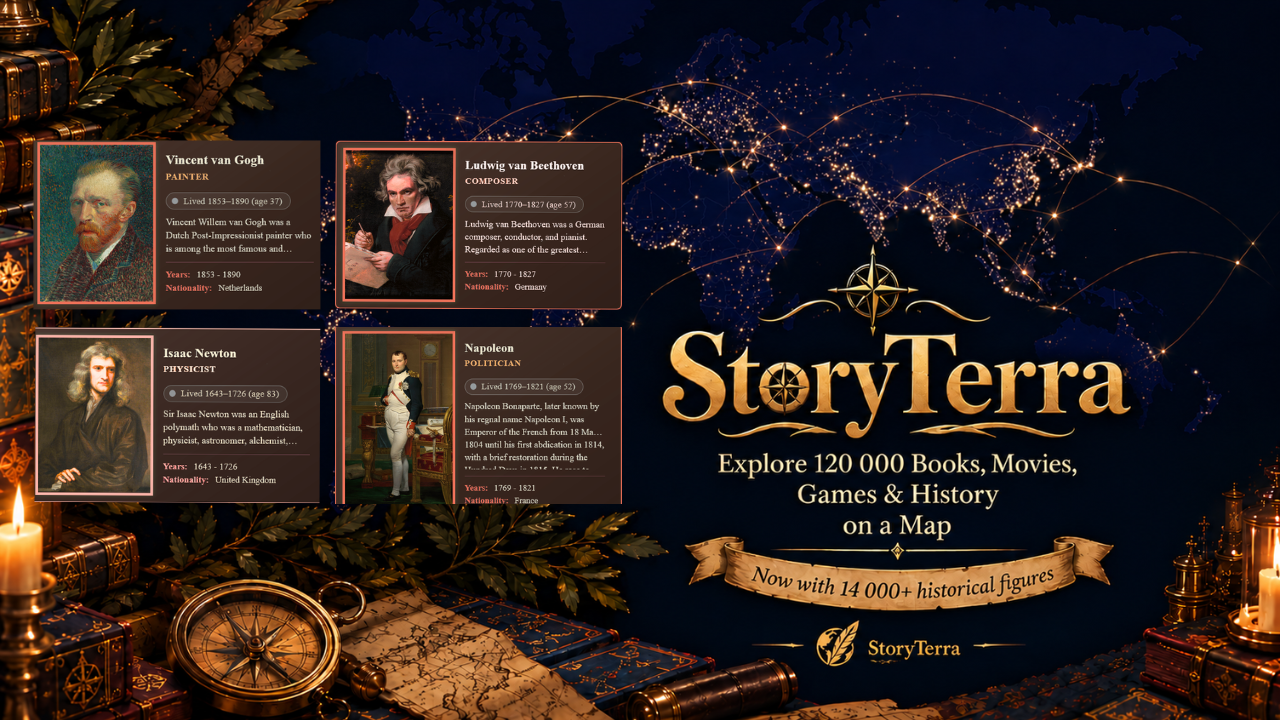
That changes today. With this update, StoryTerra adds over 14,000 historical figures, from ancient philosophers to Renaissance painters to modern celebrities, mapped by birth and death, and explorable across the map and timeline exactly the way stories, historical events, and YouTube documentaries already are.
A New Tab, A New Way to Explore
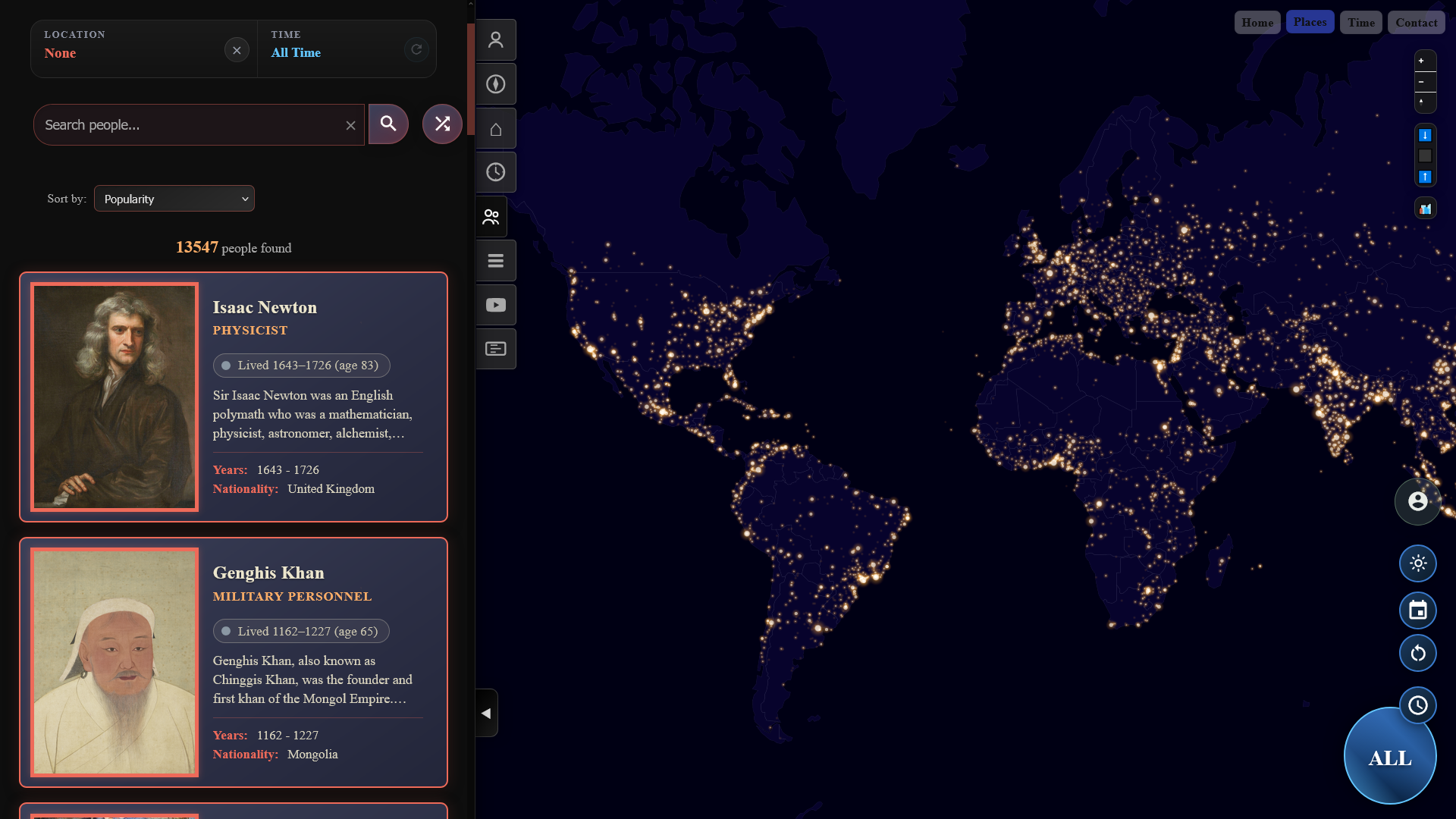
The People Tab works just like the Home and History tabs you already know: pick a location on the map, set a year (or a period) on the time slider, and see who fits. From there, results can be sorted by birth date (earliest or latest) or by popularity.
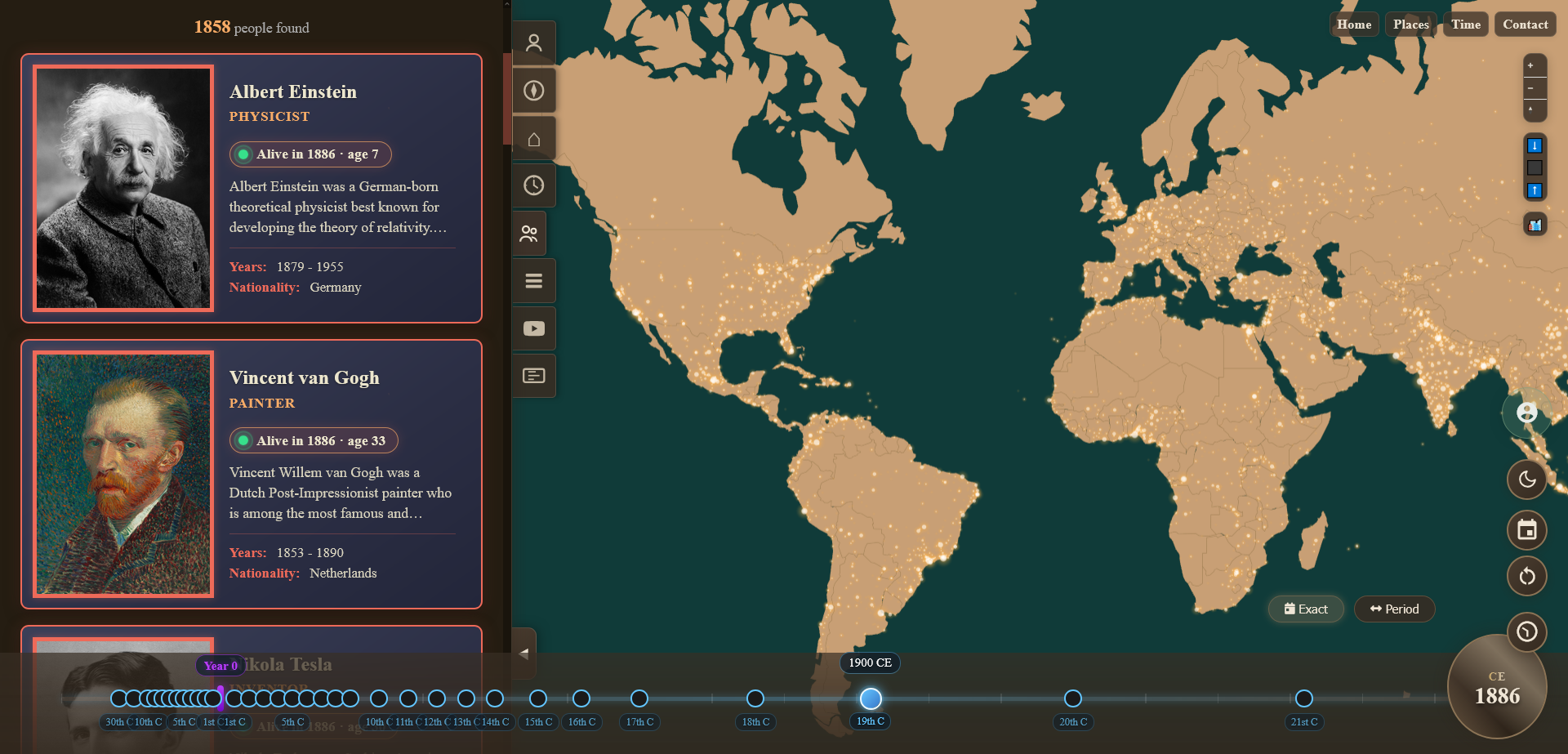
But because people aren't just tied to a single moment, this tab does something the others can't. Select a year like 1886, open the People panel, and you'll see not just who was alive then, but exactly how old each of them was at that moment. A writer in her twenties, a scientist in his final year, a politician not yet born, all lined up side by side in the same instant of history.
Inside a Person Card
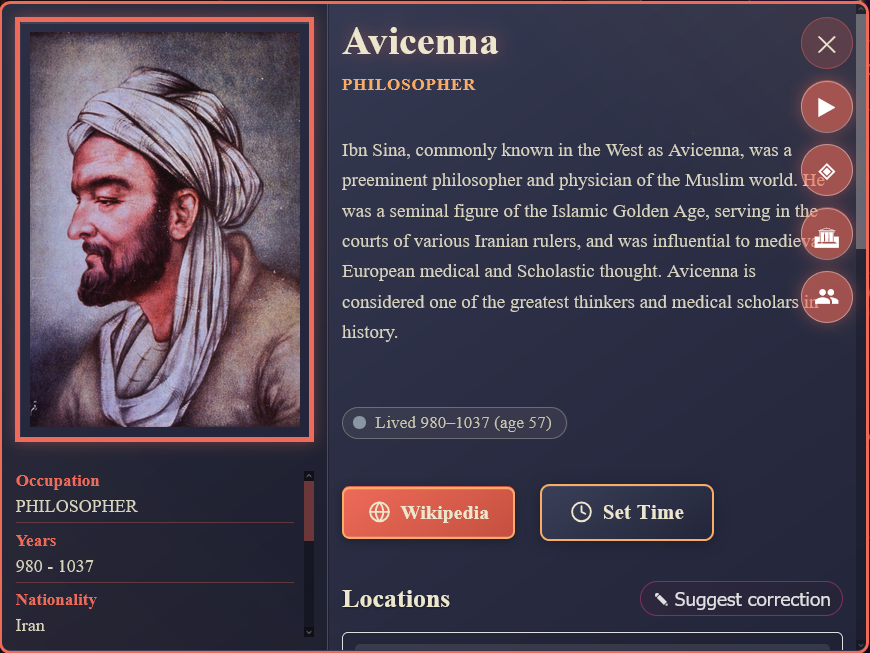
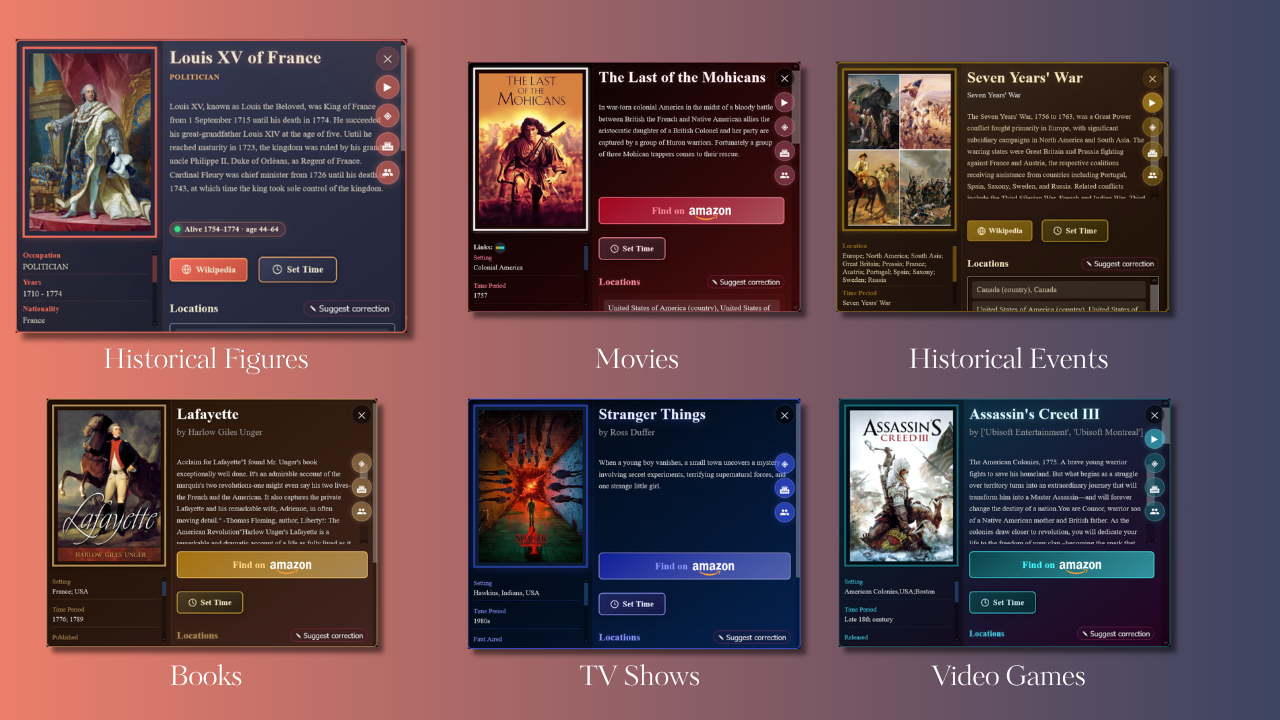
Each person card is built with the same depth you'd expect from a story or history card:
- Wikipedia link for the full background
- Birth and death years, along with birthplace and place of death
- Video button — YouTube videos related to the person
- Similar Stories button — books, movies, shows, and games connected to them
- History button — opens the History panel, filtered to real-world events that happened during this person's lifetime and in the places they lived
- People button — see who else was alive alongside them (more on this below)
The People Panel, Now Everywhere
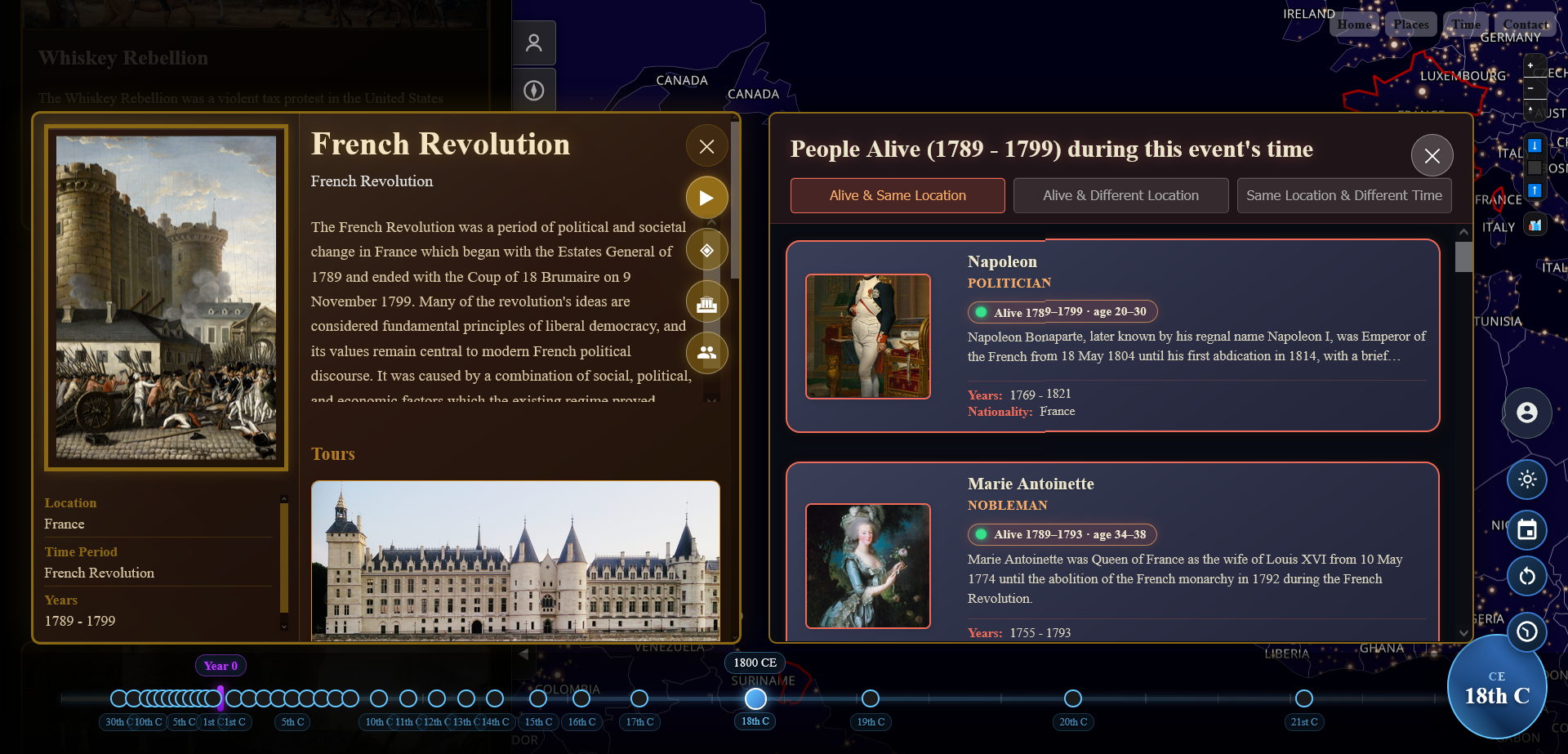
This is the part that ties the whole site together. Every card on StoryTerra, story, historical event, person, or video, now has a People panel.
Open it on any item, and StoryTerra looks at that item's time and location and surfaces the people who were alive then and there, showing you exactly what age they were across that span. Reading a novel set across 1700 and 1900? You'll see who was alive at the start of that window and who was alive by the end. Watching a documentary on Ancient Greece? You'll see Pythagoras and his contemporaries, ages and all.
Every person listed can be opened into their own full card for more detail.
A Timeline for Every Panel
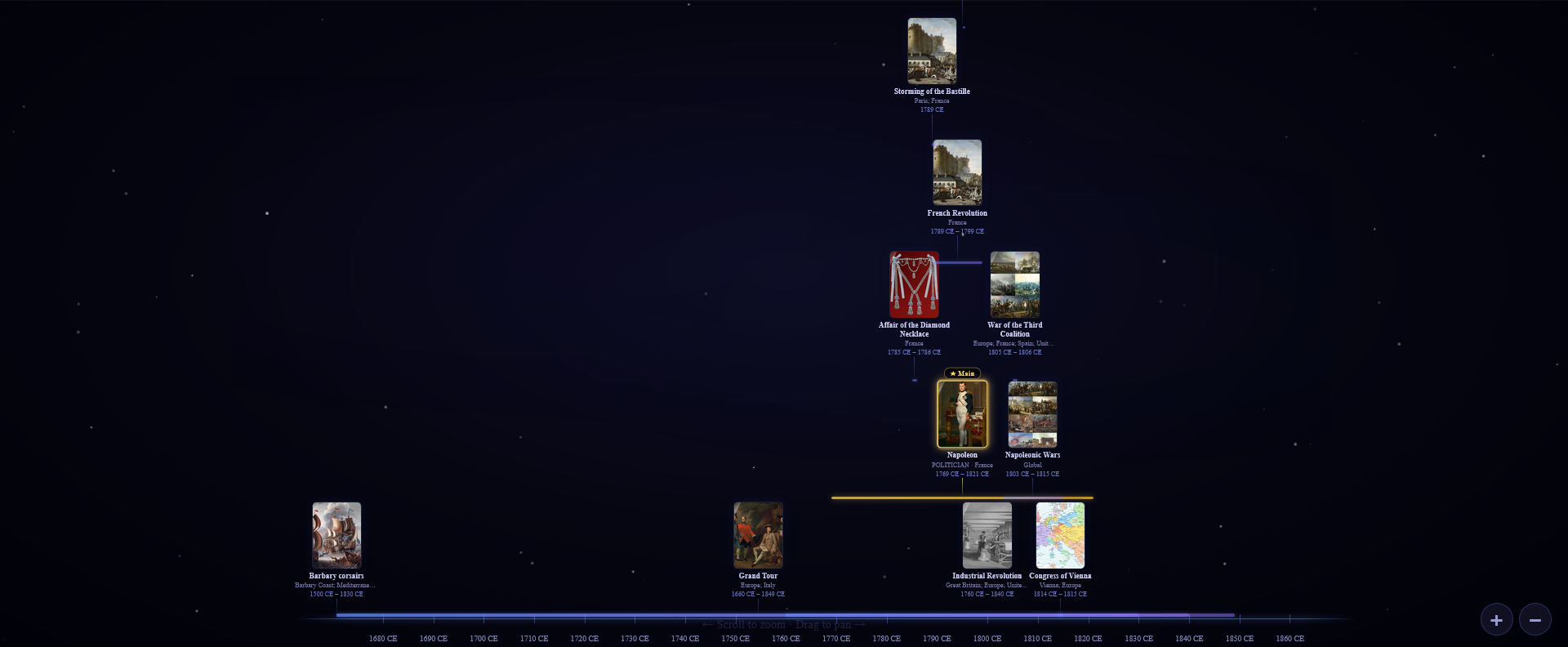
History and People panels have both been upgraded with a visual timeline view, letting you see time laid out in front of you instead of scrolling through it line by line.
Open the People panel on any item now, and instead of just reading names and age ranges, you'll see each person's life plotted as a bar across time, making it immediately obvious who lived long, who died young, and exactly where their lives overlapped with each other, and with the item you started from. The same applies to the History panel: events now stretch across the timeline visually, so you can see at a glance which events were brief flashpoints and which spanned decades, and how they line up against everything else happening in that window.
Search, Added Where It Was Missing
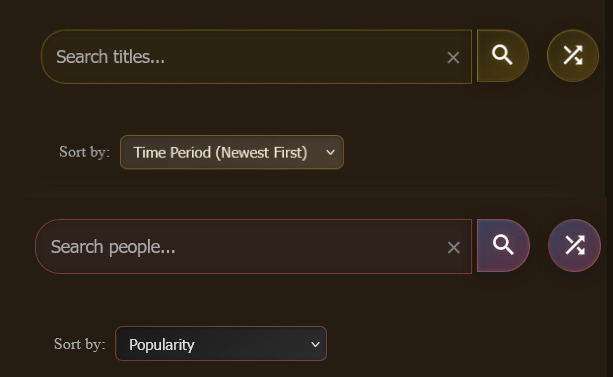
Both the History panel and the new People panel now include search, so you can look up a specific event by title or a specific person by name directly, instead of relying purely on the time and location filters.
Set Time, Now With Context
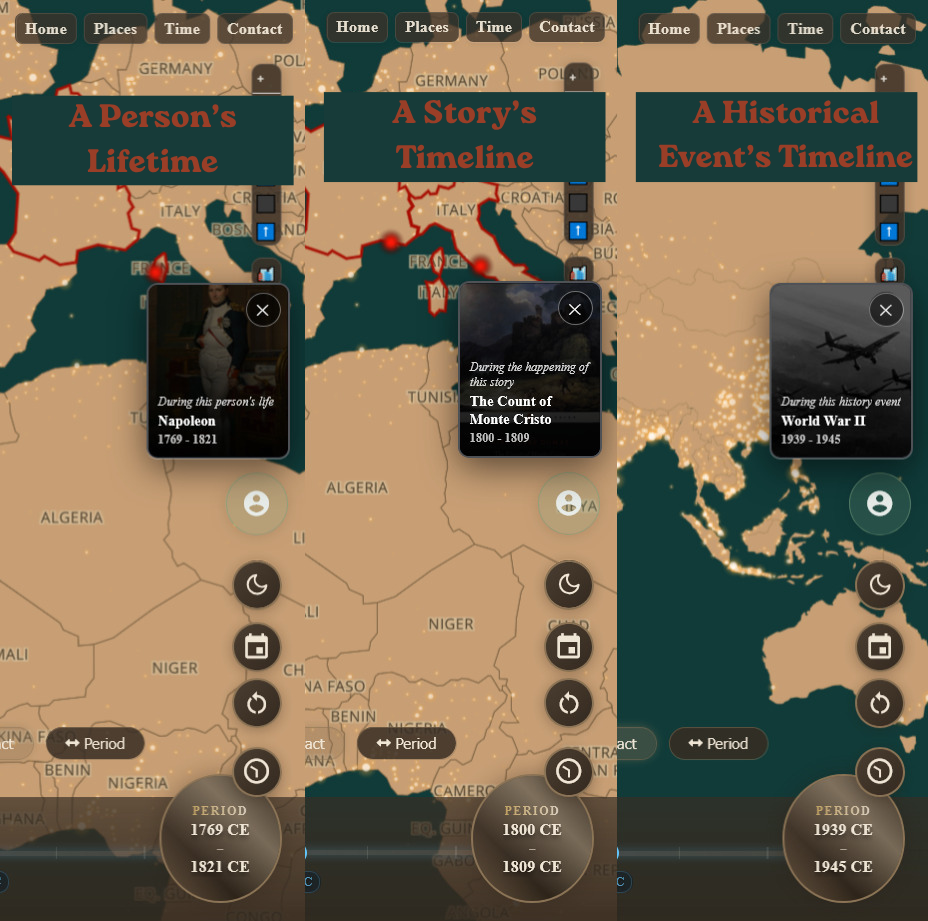
The Set Time button has been on story and history cards for a while, it snaps the global timeline to match that item's period. Now, whenever you use it, a small card appears on the right edge of the screen confirming what the selected time is based on: a person's lifetime, a story's setting, or a historical event's span. A small change, but it makes the timeline feel a lot less like a blind jump and a lot more like a guided one.
Why This Matters
StoryTerra started as a map of fiction, then grew into a map of fiction and history side by side. With people now woven through every layer, all three, stories, history, and the actual human beings who lived through it all, can finally reference each other directly. Open a novel and see who was alive to witness it. Open a person and see the events that shaped their life and the stories inspired by it. Open a historical event and see the crowd of names attached to it.
It's still early days for this layer, more figures, more connections, and more refinement may come in the future, but the foundation for a truly connected map of stories, history, and the people behind both is now in place.
People cards now join the family!